Custom Acrylic Fabrication from Drawing, Sample or Concept
Precision acrylic fabrication for custom displays, signage, components and commercial products—from engineering review and prototyping to repeat production and finished assembly.
You Don’t Need a Perfect Tech Pack to Start
Custom fabrication projects often begin before every technical detail has been finalized. We can review different types of input and identify what still needs to be defined for production.
Drawing
Send dimensions, CAD files or production drawings for manufacturing review.
Physical Sample
Existing products can provide a practical reference for dimensions, construction and finish.
Photo or Sketch
Reference images and sketches can help establish the intended structure and appearance.
Concept
Early ideas can be reviewed to determine what information is required before prototyping.
Define the Part Before Choosing the Process
A custom acrylic component should not begin with the question “laser or CNC?” The first question is what the part needs to do.
Dimensions, load, appearance, tolerances, assembly and quantity determine which manufacturing route makes sense.
Overall geometry and critical measurements.
What the component needs to hold, protect, present or support.
Material type and thickness selected around the application.
Critical fit and assembly points identified before production.
Visible surfaces, edges, graphics and appearance requirements.
How individual parts become the finished product.
Multiple Processes. One Finished Product.
Custom acrylic products often require several manufacturing processes. The process is selected around each component and its function.
Laser Cutting
Profiles, lettering and repeatable acrylic components with controlled geometry.
CNC Machining
Routing, drilling, slots, pockets and more complex component machining.
Heat Bending
Controlled bends and formed structures for custom acrylic components and products.
Polishing
Edge and surface finishing selected around visible product requirements.
UV Printing & Engraving
Graphics, logos, information and decorative details integrated into fabricated parts.
Bonding & Assembly
Components brought together into finished displays, signage and custom assemblies.
Production Capability You Can See
Cutting, machining and finishing are different stages of the same manufacturing system.
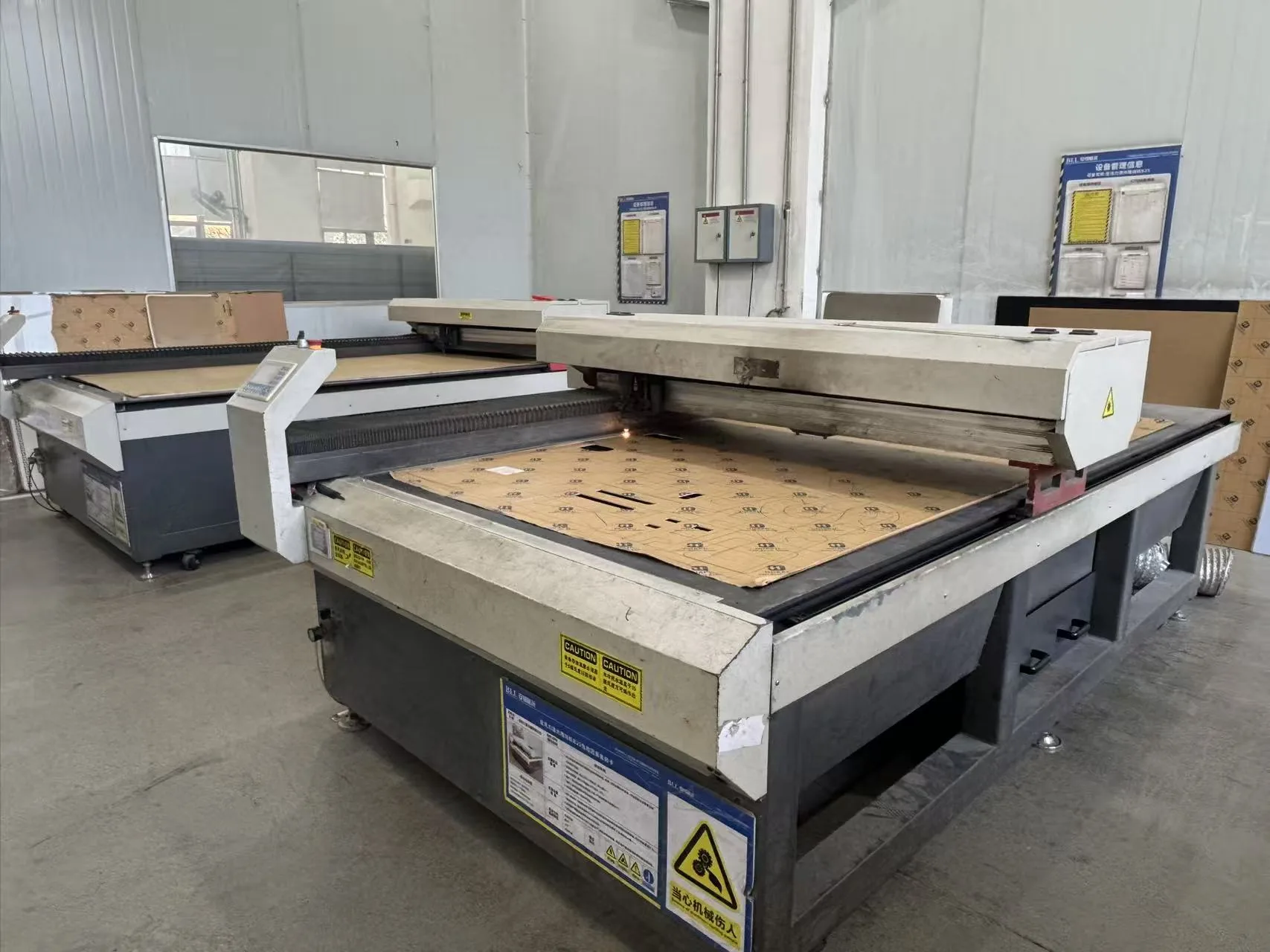
Laser Cutting
Profile cutting & repeatable components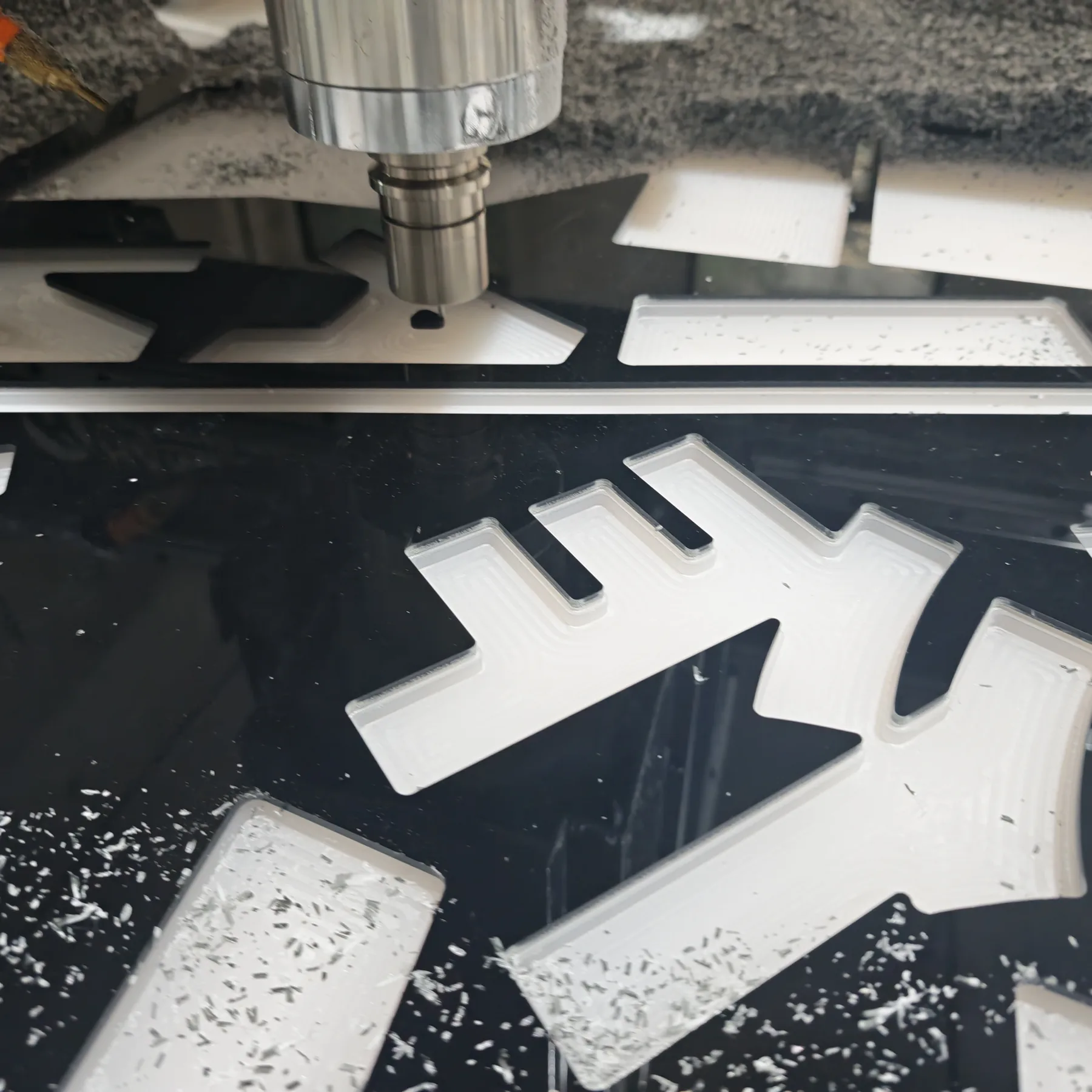
CNC Machining
Routing · drilling · precision features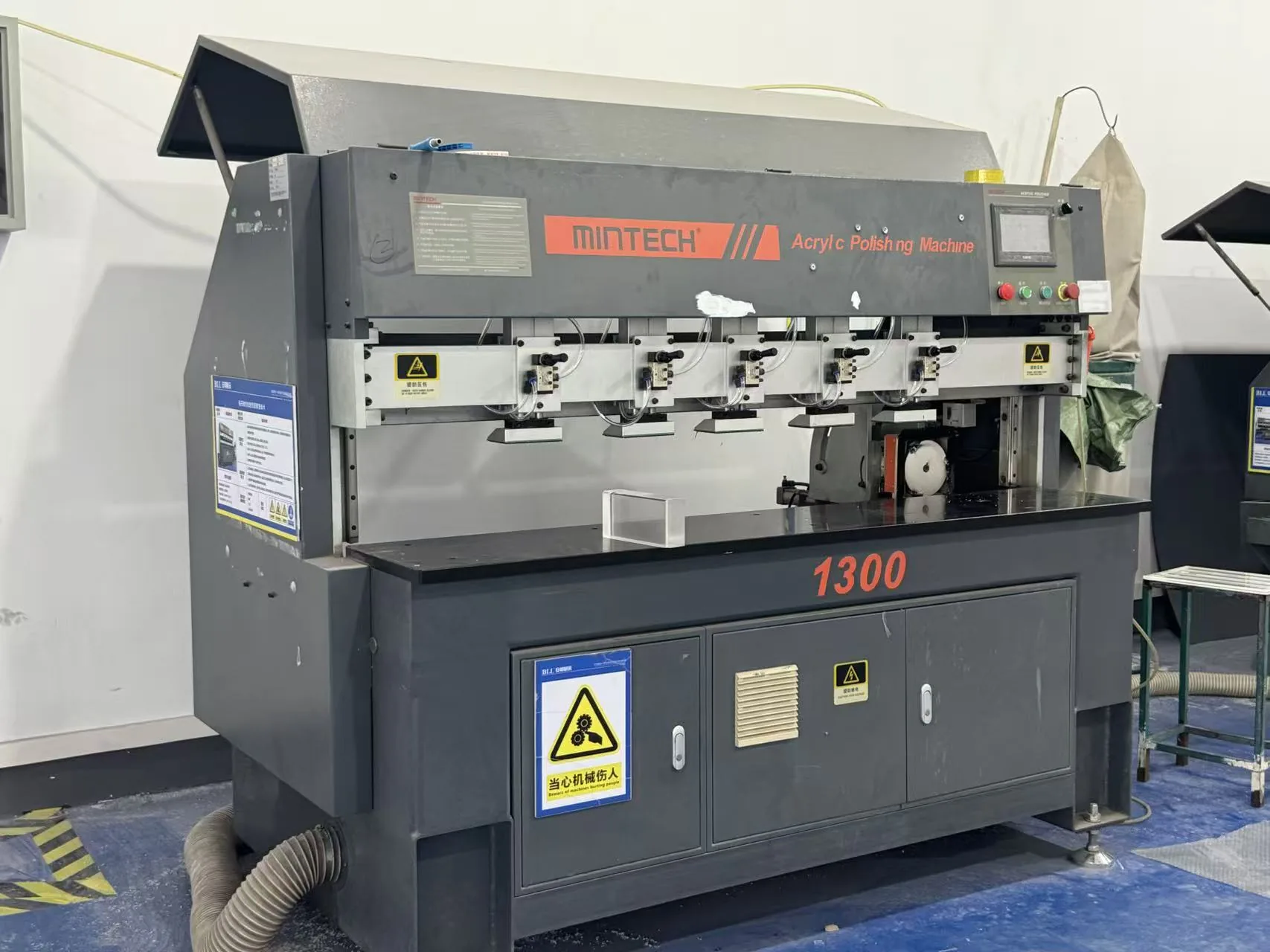
Edge Finishing
Presentation & visible edge qualityMaterial Selection Should Follow the Application
Thickness and material should be selected according to span, load, geometry, appearance, processing and shipping—not simply because a particular sheet thickness is commonly available.
High-visibility components, covers, displays and transparent structures.
Brand, decorative and application-specific color requirements.
Reflective presentation and decorative applications.
Diffused, matte and controlled-transparency effects.
An alternative material for selected forming and fabrication applications.
Selected project components can combine acrylic with other suitable materials.
Use the Process That Fits the Part
We do not design every component around a single machine. Different geometries and functions can require different fabrication methods.
The goal is a practical production route that balances appearance, function, repeatability and manufacturing efficiency.
Prove the Product Before Repeating It
Prototyping helps confirm dimensions, appearance, fit, assembly and manufacturing details before those decisions are repeated across a production run.
Input
Drawing, sample, photo, sketch or concept.
Engineering
Define material, dimensions, structure and process.
Prototype
Build the first physical product for review.
Revision
Correct details identified during evaluation.
Golden Sample
Freeze the approved production reference.
Production
Manufacture against the approved specification.
Control What Matters to the Finished Product
Inspection requirements depend on the component and application. Dimensional accuracy is important, but so are appearance, bonding, fit and final assembly.
Critical dimensions and production tolerances.
Material type, thickness and specified visual characteristics.
Scratches, edge condition, finish and visible appearance.
Graphics position, appearance and project-specific requirements.
Joint condition and visible assembly quality where applicable.
Fit, function and finished product condition before packing.
Custom Components for Displays, Signage & Commercial Products
Fabrication capability supports both complete products and individual custom components used in larger commercial projects.
Display Components
Custom shelves, holders, bases, panels and structural display parts.
Signage Components
Faces, panels, lettering and fabricated elements for signage projects.
Boxes & Covers
Protective covers, enclosures, display cases and custom acrylic boxes.
Retail Fixtures
Fabricated acrylic elements for POP and retail display systems.
OEM Components
Custom parts manufactured to customer drawings or approved samples.
Project-Specific Parts
One-off or repeat components developed around commercial project requirements.
From Fabricated Parts to Complete Products
Have a Custom Part or Product to Manufacture?
Send us your drawing, sample, photo, dimensions or concept. We’ll review the part and help determine the material, manufacturing process and next development step.